

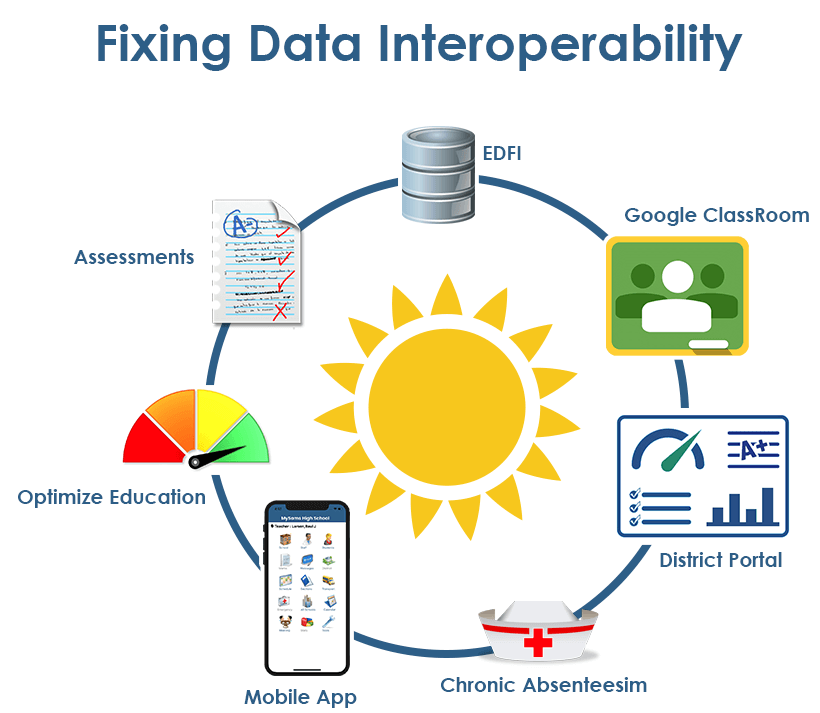






Our world is swiftly embracing new technologies, and with them, the power of data has become a key competitive edge. This is especially true for schools and educational institutions.
These places are creating huge amounts of data daily, thanks to tech-enabled teaching and learning tools. But with so much data, we face challenges around joining it all together and making it work as one.
This blog post will take a closer look at the edfi data standard, explaining how it can help make data in the education sector easier to work with.
Why Should We Use EDFI Standards?
- Making Data More Compatible
A big benefit of using the EDFI Standards is that they make data more compatible. In the past, different data systems in education didn't talk to each other very well. This made it hard to share and combine data. But by using a shared language for data, the EDFI Standards make it easy to swap and combine data.
- Better Decision-Making
A shared data model lets us see all our data together in a way that makes sense. With all our data gathered together in a clear and easy-to-understand way, teachers and administrators can make better decisions. The EDFI Standards encourage decisions based on data, which can help students do better in the long run.
- Easier Data Management
The EDFI Standards also make managing data much easier. By cutting down on the complexity of different data systems, these standards make it simpler to handle data. This also saves time and money, freeing up resources for other important areas of education.
How to Use EDFI Standards?
Deciding to use the EDFI Standards is a smart move. But putting it into practice needs careful and thoughtful steps. Here's a guide to help you:
- Evaluate
Start by giving your current data systems a thorough check. Find areas that need improvement and gaps that need filling. Doing this will give you a clear idea of what changes you need to make to your data management to meet the EDFI Standards.
- Plan
With a clear idea of your current data systems, you can start making a detailed plan. Your plan should outline which parts of the EDFI Standards you'll use, what resources you'll need, and how long it should all take.
- Put into Action
When you start using the EDFI Standards, take it slowly. Deal with each part one at a time, giving you space for careful work and fast problem-solving.
- Test
Testing is a crucial part of this process. It helps you check if everything is working as it should and if the data is being correctly combined and understood.
- Teach and Support
Once you've started using the EDFI Standards, remember to share the knowledge and offer support to everyone involved. This includes teachers, administrators, and any other staff members who will be using the new data systems.
Conclusion
Data has a lot to offer the world of education, despite its huge size and complexity. By using the EDFI Standards, you can bring order and connectivity to your data, creating a complete view of data that helps make smarter decisions.